Wonderbag and the South African Art of Keeping Dinner Going
A grandmother’s energy-saving trick, a few cushions and the 2008 power cuts led to the Wonderbag — a reminder that an ordinary, improvised idea can become a real product.
Al Chapo Tshabalala — 4 min
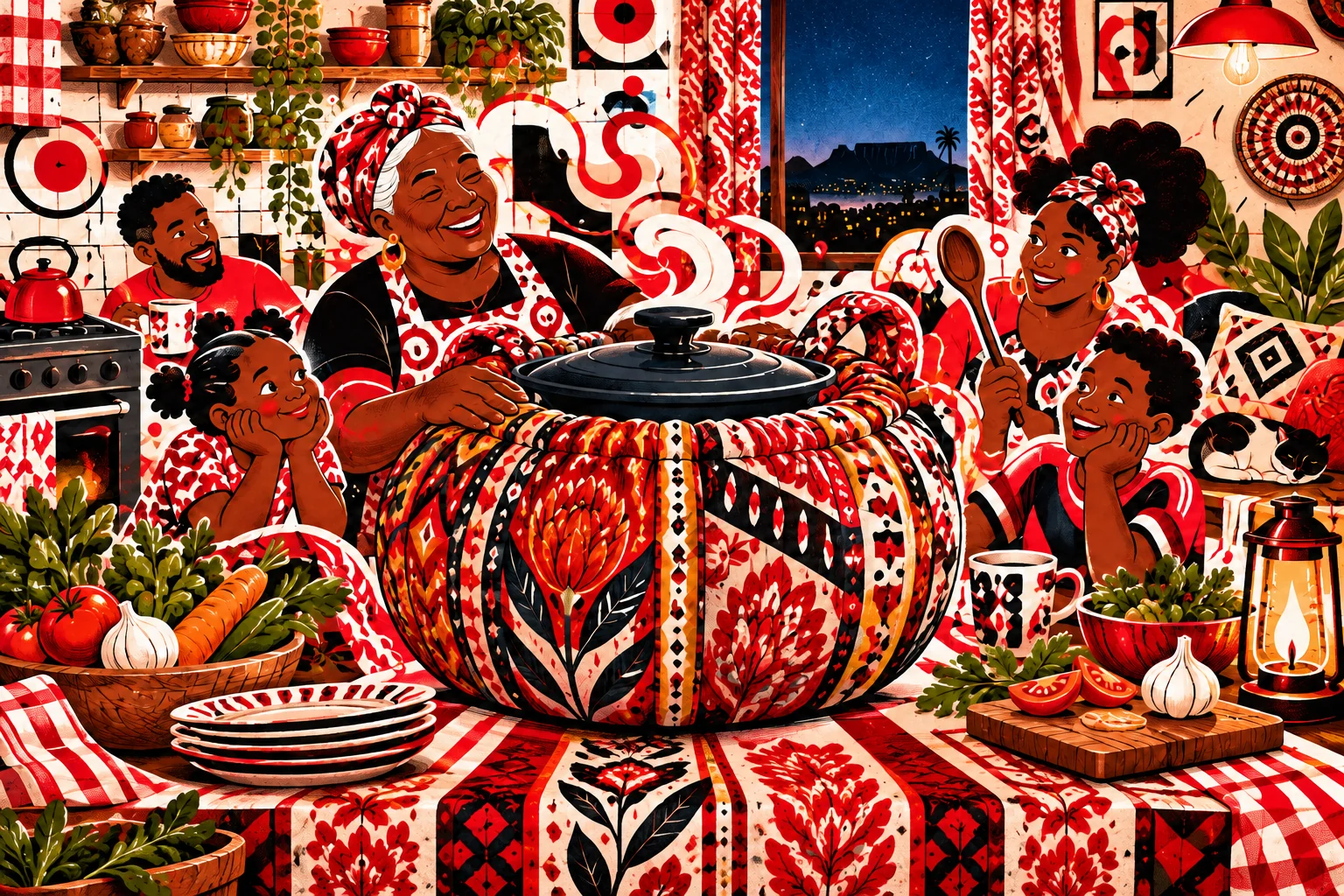
Dinner has a remarkable ability to become urgent at exactly the wrong moment. You have answered twelve emails, found the missing school sock and become involved in a discussion about whether there is “anything to eat”. There are ingredients. Apparently these are a separate category.
Into this domestic negotiation comes a South African idea with an unusually comforting appearance. The Wonderbag looks rather like something a pot would wear to stay with its grandmother.
Its job is serious. It uses insulation to keep a heated pot cooking after it has been taken off the stove. And its origin offers something for anyone who has ever wondered whether their ordinary, slightly improvised idea could become a real product.
According to Wonderbag’s account of its beginnings, Sarah Collins founded the venture in 2008 in response to South African power cuts. She drew on a method her grandmother had used to save energy and tested the principle by surrounding a hot pan with cushions after switching off the stove. The company also acknowledges the older haybox cooking tradition.
There is something lovely about an invention story in which the cushions get a supporting role. Usually they just watch us lose the remote.
The product developed from that experiment gives the pot a purpose-built insulated home. Wonderbag’s explanation of how it works describes heating food on the stove first, then putting the pot inside and closing the bag so retained heat can continue the cooking. Anyone trying it should follow the maker’s recipes and instructions for their dish. The first heating stage remains part of the process.
That last detail matters to the story. A good idea gets more interesting when you understand what it actually does. You can picture the pot leaving the stove. You can picture the bag closing around it. Suddenly the thing makes sense without anyone producing a slide entitled “Our Revolutionary Ecosystem”.
Imagine, purely for comic purposes, presenting this concept at a very excitable agency meeting. Somebody wants to put Bluetooth in it. Somebody suggests a celebrity chef. Someone else asks whether the bag can send a notification when dinner is emotionally ready.
Meanwhile, the original question is still sitting quietly on the table. How do we help a pot keep doing its work after the heat source has been switched off?
That question gives the design something concrete to solve. It also gives a writer something concrete to explain. A reader can take an interest in a product without first signing up for an entirely new personality.
For South African creatives, there’s an encouraging lesson in where Collins started. A household frustration and a remembered method were enough to begin an experiment. The work then lay in developing that experiment into an object other people could use. Recognising an old principle and finding a useful form for it takes its own kind of imagination.
We celebrate that instinct in 10 South African Inventors Who Made It Big While We Were Looking Somewhere Else. Wonderbag deserves its own moment because the central idea is so easy to recognise once someone shows it to you. You find yourself thinking, “Of course,” which is a very comfortable thing to say after somebody else has done the thinking.
There’s a similar pleasure in the robot birds made with wire art and retired cellphone parts. Familiar materials invite a second look. The kitchen and the forgotten phone drawer both turn out to have more possibilities than we gave them credit for.
Of course, noticing a possibility is the beginning of the work. A product needs testing, clear instructions and people willing to use it in the middle of a normal day. Real kitchens have awkward cupboard space. Real people have recipes they trust. Anyone designing for them needs to pay attention to those details, including the person asking where this new thing is going to live.
If your agency helps people turn practical ideas into products and stories others can understand, list your agency on CreH8ive. Show the work, explain the problem you helped solve and give the next person with a promising experiment a way to find you.
For now, spare a thought for the humble cushion. Somewhere in this invention’s history, it got off the sofa and contributed to dinner.
Which is more than can be said for the person still asking whether there’s anything to eat.
Keep reading
Can We Make It Look Expensive by Friday
A client’s request to make a poster look expensive hides a useful brief: who is buying, where will they see it, and what can a real budget achieve by Friday?
Al Chapo Tshabalala — 4 min

The Button That Needed a Bigger House
A translated button can reveal who a design was really made for. Give the words room, bring readers in early and test the longest version on the smallest screen.
Al Chapo Tshabalala — 4 min

Advertising Wars: Coke, Pepsi and the Day KFC Fixed a Big Mac
From Pepsi borrowing Coke’s polar bear to KFC fixing a Chicken Big Mac, the best advertising comebacks give us more than a punchline.
Al Chapo Tshabalala — 4 min