Can You Send the File So We Can Change One Little Thing
A client wants to change one little thing. A useful design handover starts with a simpler template, clear labels and a chance to try the update together.
Al Chapo Tshabalala — 4 min
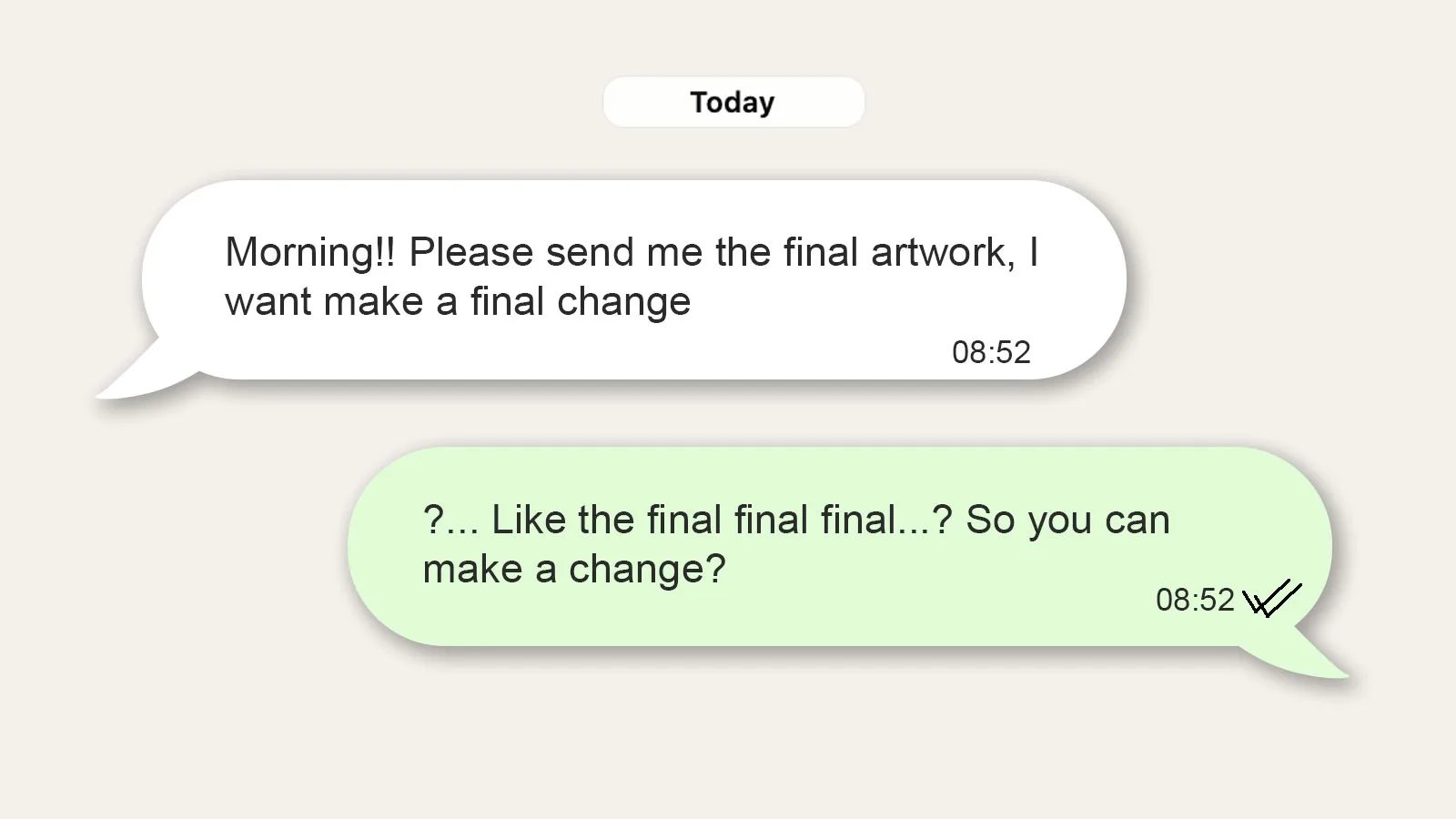
The request arrives with the gentleness of someone asking to borrow a teaspoon.
“Can you send the file so we can change one little thing?”
A designer named Thabo reads this message while looking at a poster with forty-seven layers. The client runs a dance studio. Next week’s class time has changed. She would like to update it herself.
This is reasonable. Thabo knows it is reasonable. His face is still doing something unusual.
He is remembering the last time somebody changed a time. The sponsor’s logo went for a walk. The venue name became decorative. A photograph stretched until the instructor appeared to have been viewed through the back of a spoon.
But the client has a business to run, and waiting for a designer to change “six” to “seven” is testing her relationship with the clock.
There is a better conversation available here. It starts with asking what she wants to update next month as well as next week.
In our imaginary studio, the answer is class times, prices and occasional venue details. She doesn’t want to redesign the brand. She wants to put the right information in front of the people who are supposed to arrive wearing takkies.
Once Thabo knows that, the job becomes easier to define. They can agree on a reusable layout with room for those details. They can also decide which changes need the agency’s help, and how the handover fits into the project’s time and cost.
That agreement is worth having before anyone promises that a file will be “fully editable”. Editable by whom, using what, while somebody at reception is asking where the spare extension lead lives?
A designer’s working file can contain decisions that make perfect sense to the person who built it. To somebody opening it for the first time, a layer called “FINAL new copy 3” offers about as much reassurance as an unlabelled container at the back of the fridge.
So Thabo makes a simpler version for the client’s routine updates. He uses the software they have agreed she will use. He labels the parts clearly. He leaves a generous space for the class information, because Thursday evening has a habit of acquiring extra words.
If you’ve read our Word article about the button that needed a bigger house, you’ll recognise that particular design problem. Text needs somewhere to go when real life adds to it.
Then comes the most useful part of the handover. The client tries making an update while Thabo watches.
She changes the time without difficulty. She struggles to find the export setting. She asks which version should go on WhatsApp. These are excellent things to discover together, instead of at half past eight on a Sunday when both of them have dinner on their minds.
Thabo writes a short guide using the actual file. It shows where to change the details, how to save a new copy and which export to use. They also establish where the approved version will live. Nobody needs to excavate three email chains to find it.
There are other details to settle. Any fonts, photographs or other assets included in a handover need the appropriate permissions for the intended use. The project agreement should make clear what files are included. A quick check now gives both sides a better idea of what they’re receiving and what they can do with it.
For another fictional client conversation that improves once somebody asks a useful question, read our Word article about making a poster look expensive by Friday. In that story, too, the first sentence of the brief leaves a few things to unpack.
Back at the dance studio, the template has earned its place when the next change arrives. It might still need adjusting. A new class could have a longer name. A second venue could make the poster too busy. A useful handover includes a way to return with those questions.
If your agency helps clients keep their everyday communication working, list your agency on CreH8ive. Tell people what that help looks like after the launch presentation ends.
In our fictional ending, the client updates Thursday’s time and sends the poster out. Thabo closes his laptop. The instructor remains a recognisable shape.
And somebody, somewhere, arrives at the correct hour.
For a request involving “one little thing”, that’s a satisfying result.
Keep reading

Let the Junior Present the Idea They Actually Had
The junior designer made the campaign and the presentation, and even found the cable. Letting him explain the idea—with an experienced colleague beside him—is a practical way to share credit and build confidence.
Al Chapo Tshabalala — 4 min

Wonderbag and the South African Art of Keeping Dinner Going
A grandmother’s energy-saving trick, a few cushions and the 2008 power cuts led to the Wonderbag — a reminder that an ordinary, improvised idea can become a real product.
Al Chapo Tshabalala — 4 min

Can We Make It Look Expensive by Friday
A client’s request to make a poster look expensive hides a useful brief: who is buying, where will they see it, and what can a real budget achieve by Friday?
Al Chapo Tshabalala — 4 min