Your Agency Culture Just Booked Another Workshop (And Honestly, That’s a Good Sign)
The agency is fictional, of course. The calendar invitation may feel suspiciously familiar.
Al Chapo Tshabalala — 5 min
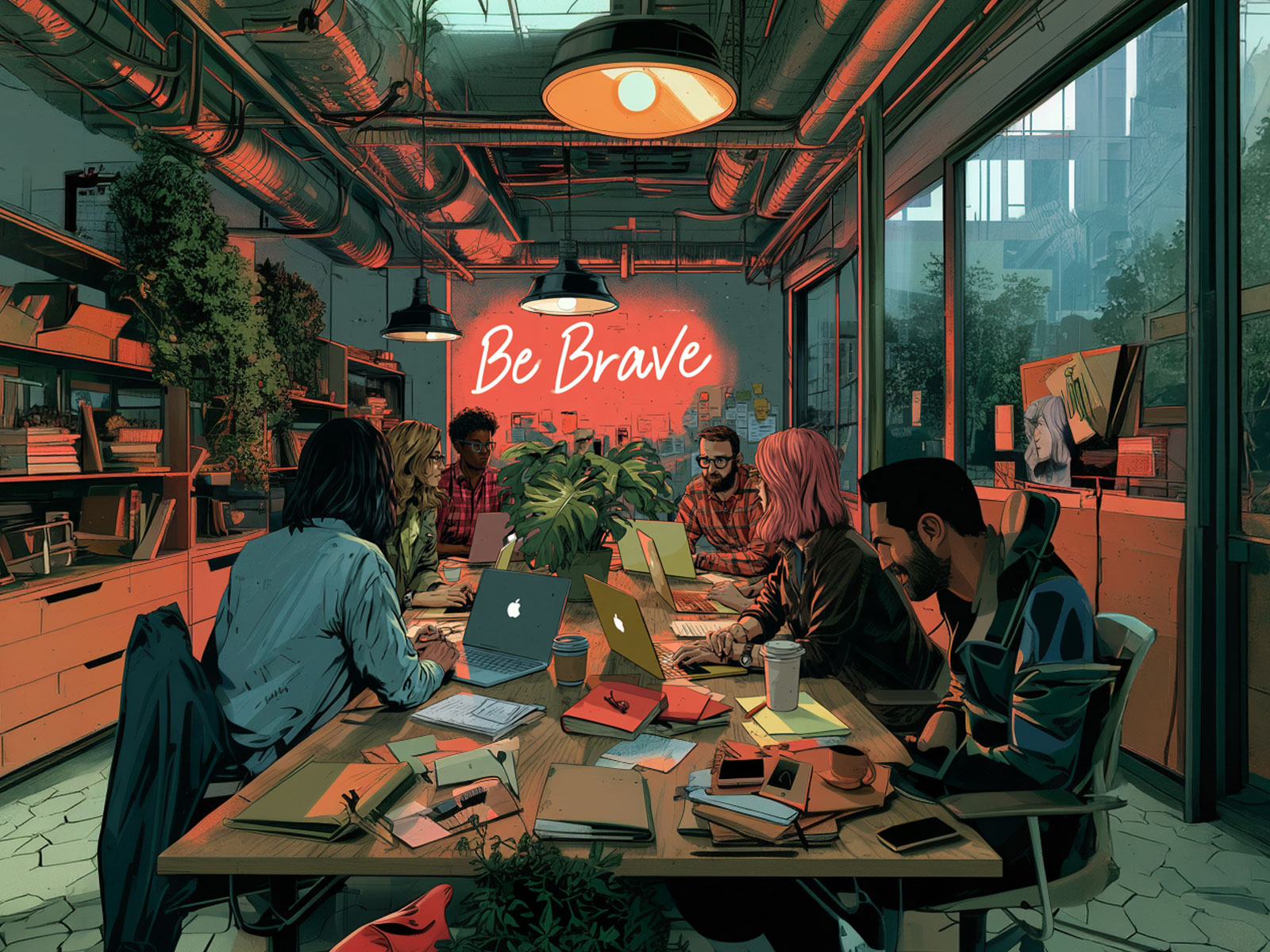
Picture this: at our entirely imaginary agency, the culture committee has booked a workshop to figure out why nobody has time to work. Attendance is compulsory, and please bring an open mind and the concept presentation you were meant to finish during the workshop.
The agency is fictional, of course. The calendar invitation may feel suspiciously familiar.
Here’s the lovely thing, though: a team that cares enough to talk about its culture is already ahead of the game.
Somewhere between the welcome pack and your third postponed lunch, culture stops being “a nice place to work” and becomes how people behave when a deadline slips, the client phones and there’s exactly one decent meeting room left. That’s when you find out whether “bring your whole self to work” also covers the part of you that would like to go home. (Spoiler: it should!)
The office tour with excellent production values
Our imaginary recruit gets the full treatment. Exposed brick, a bean-to-cup coffee machine and a “real” plant (probably a Monstera with those gorgeous holes in the leaves). There’s a neon sign telling everyone to be brave, hanging above a printer nobody dares to touch.
“We wanted a space that encourages collisions,” says the tour guide.
And the kitchen doorway is already delivering. Love that for us.
There’s nothing wrong with a beautiful office, and creative people deserve somewhere pleasant to spend their days. It just works best when the furniture isn’t also asked to do the job of good management. A standing desk can’t clarify a brief, a rooftop can’t tell someone their workload is too heavy, and a beanbag in the boardroom doesn’t decide who approves the work. People do that, and they’re brilliant at it.
Everyone has a title, so let’s make sure someone owns the decision
At 10:00, the team gathers to talk about a campaign for a neighbourhood hardware shop. By 10:40, the presentation describes a movement for people who refuse to be defined by conventional shelving.
The hardware shop wanted to sell shelves.
Then one brave strategist asks what customers actually need. Silence. Somewhere, a mood board loses confidence. But what a gift that question is! Before we blame the person asking awkwardly useful things, have a look at The Strategist and the mind behind the madness. A little clarity early on saves a remarkable amount of interpretive dance later.
The meeting wraps when someone says, “Let’s take this offline.” Everyone is in the same room, and nobody knows where offline is, but it clearly has plenty of capacity.
The braai is wonderful, and the leave request deserves an answer too
Friday arrives with a team braai and a chance to celebrate the people who make the agency special. Somebody remembered the vegetarian option, and somebody else brought a speaker that could address a stadium. Lovely!
Then a junior asks whether Monday’s leave has been approved. “We’ll chat,” says a manager, reaching for the tongs with sudden professional urgency.
This is where culture gets interesting. The social bits are easy to photograph, while the really good stuff happens in less flattering lighting: answering a leave request, paying a supplier on time, giving clear feedback and owning up when a deadline was promised before anyone checked the studio schedule.
Nobody puts “we answered your question the first time” on a recruitment poster. Maybe they should. It would make people stop scrolling.
When the feedback lands in the group chat
Our fictional team returns from the braai to find a voice note from the client. The campaign needs a small adjustment, and the note is six minutes long.
The account manager listens twice, writes down the actual request and asks the client to confirm it. For a moment, civilisation holds. Then a message arrives from someone who wasn’t even in the presentation.
If that sounds familiar, the story about the client with several personalities sharing one inbox deserves a spot on your reading list.
The good news is that a healthy agency can laugh at this and still look after its people. Agree on one feedback route, explain what another round costs, and stop treating every notification like a message from the mountain. Humour is a wonderful way to survive a messy afternoon. It just shouldn’t become the operating system for the whole business.
Show us the agency behind the adjectives
There’s a better story every agency can tell about itself. Explain how your team really works, show the thinking behind a great piece of work, give credit to the people who made it happen and say what kind of client relationship brings out your best.
Anyone can call themselves a collective of curious minds. So can the queue at the licensing department. Give us something we can recognise!
Want your agency to join the conversation? Head to CreH8ive Agencies and list yours. Bring the work and the people behind it. The neon sign can stay at reception.
And if your team’s running commentary has escaped the kitchen and become a show, pop over to CreH8ive Podcasts and put it on our radar. A microphone doesn’t automatically make a meeting worth hearing, but somebody out there has surely cracked it.
Meanwhile, our imaginary agency has finished its culture workshop. The conclusion: people need more uninterrupted time to work.
A follow-up session is scheduled for Thursday.
Deep breath, everyone. Kettle’s on.
Keep reading

Who Invented the Vuvuzela? South Africa Has More Than One Answer
A fan’s bicycle horn, a company’s plastic version and an older tradition: the vuvuzela’s origin story deserves more than one hearing.
Al Chapo Tshabalala — 4 min

The South African Idea That Helps Tradespeople Build a Business
Fix Forward helps construction tradespeople turn practical skills into businesses, with training, coaching and support to get the work underway.
Al Chapo Tshabalala — 4 min

Three South African Creatives Who Made Us Look Twice
Esther Mahlangu, Laduma Ngxokolo and Katherine-Mary Pichulik show what happens when familiar skills and materials find an unexpected setting.
Al Chapo Tshabalala — 4 min