A Brilliant South African Idea Turns One Creative Day Into Books for Children
Twelve hours can disappear surprisingly quickly when you work in a creative job. There is the idea, the other idea, the file you saved somewhere sensible, and a lunch that somehow becomes a packet of biscuits.
Al Chapo Tshabalala — 4 min
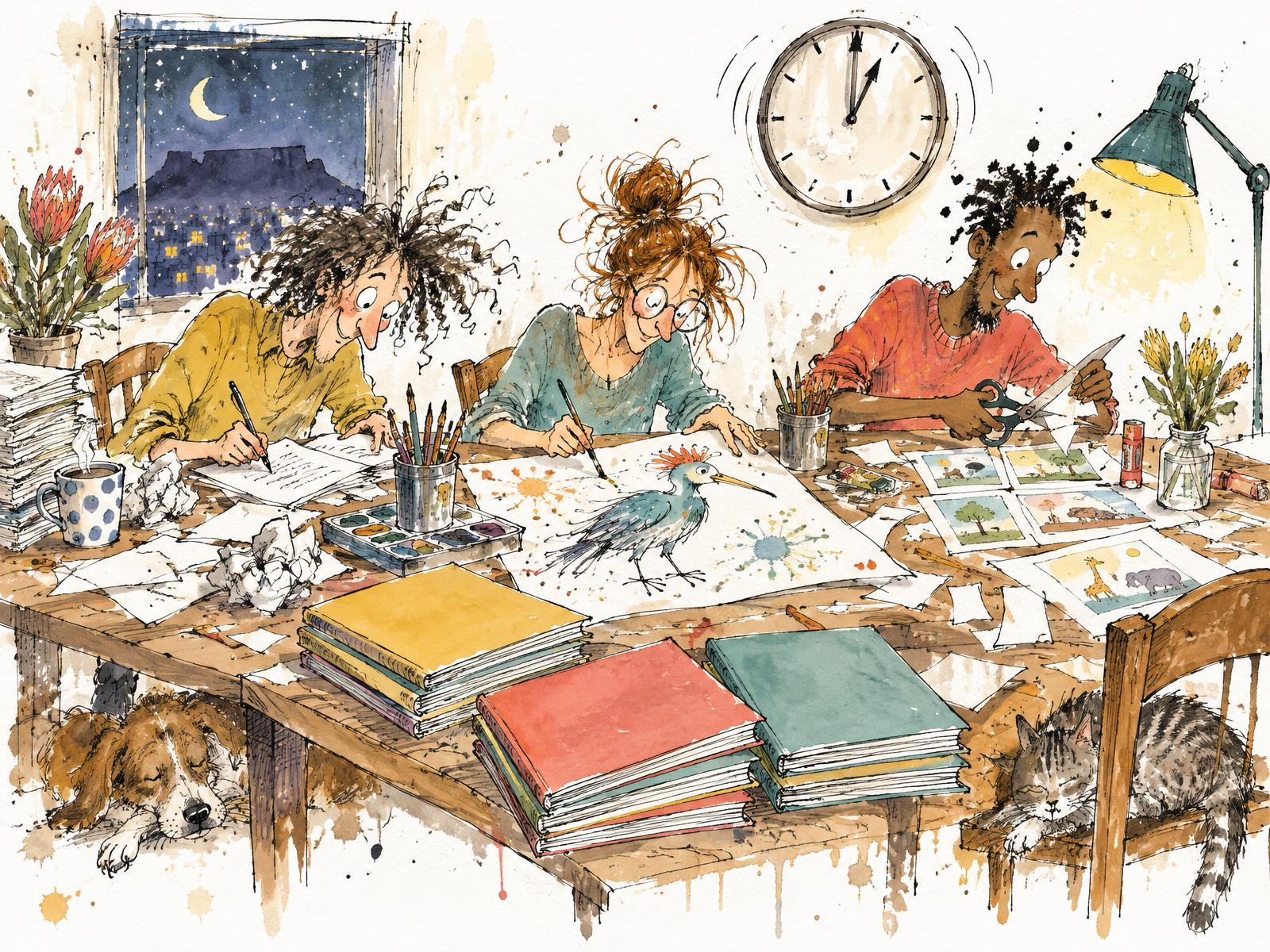
Twelve hours can disappear surprisingly quickly when you work in a creative job. There is the idea, the other idea, the file you saved somewhere sensible, and a lunch that somehow becomes a packet of biscuits.
Now imagine ending that time with a children's book.
That is the wonderfully practical idea behind Book Dash. The South African organisation brings creative professionals together to volunteer their skills in making African picture books. It is a reminder that the things we do for a living can also become something a family takes home and enjoys together.
For anyone who has wondered whether their writing, drawing or layout skills could make a useful difference, here is an encouraging place to look. You do not have to stop being a creative to contribute. Your creative skills are precisely the point.
A deadline with a very good reason
According to Book Dash's explanation of its creative events, teams of writers, illustrators and designers work on new books in a 12-hour day, with editors, technical support and facilitators helping the process along. The organisation also mentions food and coffee, which feels like a reassuring understanding of the species involved.
The important detail is the support around the deadline. There is a defined task and people with different skills working towards it. Nobody is being asked to conjure a finished book simply by believing harder at a blank screen.
There is a lesson for creative collaboration here. A useful limit can help people make choices when the purpose is clear and the right help is available. That is quite different from deciding that every job should take a day. Please do not forward this paragraph to someone with a stopwatch and a branding brief.
Real people making real pages
This is an established model with recent work to explore. Book Dash held its 25th event in Johannesburg on 19 September 2026. Its event page lists ten books, including Amo and the missing mielies and The Red Umbrella, and credits the creative contributors.
Among those listed are writer Hlumela Ngaba, designer Aaminah Darsot and illustrator Musonda Kabwe. The range of names and roles matters: behind a welcoming cover are people offering skills they have spent time developing.
Picture a small reader meeting a new story, noticing an illustration and asking for another look. It is a lovely way to think about the audience. The work has somewhere to go beyond the presentation in which it first appears.
It also offers a useful question for our own projects: who gets to enjoy or use this when we are finished?
The clever idea includes what happens afterwards
Book Dash's approach extends beyond the creative day. In its description of the publishing model, the organisation explains how coordination, fundraising, translation, printing and distribution connect the books to children and families. Its online books use a Creative Commons Attribution 4.0 licence, allowing reuse under the licence's terms.
That is the part worth lingering over. A brilliant idea needs a route into everyday life. Someone has to think about the format, the cost and how people will get it. Those decisions deserve some applause too, even if logistics rarely gets asked to stand beside the giant novelty cheque.
For a different example of creativity meeting people where they are, read South African Tag Artistry. It is another invitation to look beyond the studio when thinking about where creative work belongs.
Your contribution can start with a sensible question
Perhaps a story like this makes you want to help immediately. Wonderful. Start by finding out what is actually needed.
Book Dash's get involved page explains routes for creative volunteers, supporters and potential partners. Creatives can join its mailing list to hear about events and applications. An application is a beginning, rather than a guaranteed place at the next event, so give the process the same care you would give a project you value.
There is a broader habit worth taking into any community project. Ask the organisation what would be useful before arriving with an unsolicited rebrand and six enthusiastic mock-ups. A clearly laid-out information sheet might be more welcome. Listening counts as creative work too.
And if you need a reminder to test an idea with the people using it, our story about a rebrand meeting the family WhatsApp group has a few familiar faces waiting.
More good work worth finding
If your team has thoughtful work to share, list your agency on CreH8ive. If your podcast makes room for creative people and their stories, put your show on the map. And sign up for The CreH8ive Times for more ideas worth talking about between deadlines.
Book Dash gives us something heartening to carry into the day: a creative skill can be both your livelihood and a way of contributing to the world around you.
Somewhere in that busy calendar, there may be room for a story a child will want to hear again. That sounds like a very good use of a few well-chosen words.
Keep reading
Your Trendy Rebrand Is About to Meet the Family WhatsApp Group (and It’s Going to Be Okay)
Al Chapo Tshabalala — 5 min
The Quick Client Change That Became a Beautiful Reminder About Teamwork
Al Chapo Tshabalala — 5 min
Your Agency Culture Just Booked Another Workshop (And Honestly, That’s a Good Sign)
Al Chapo Tshabalala — 5 min